

Room service is only a helicopter away.
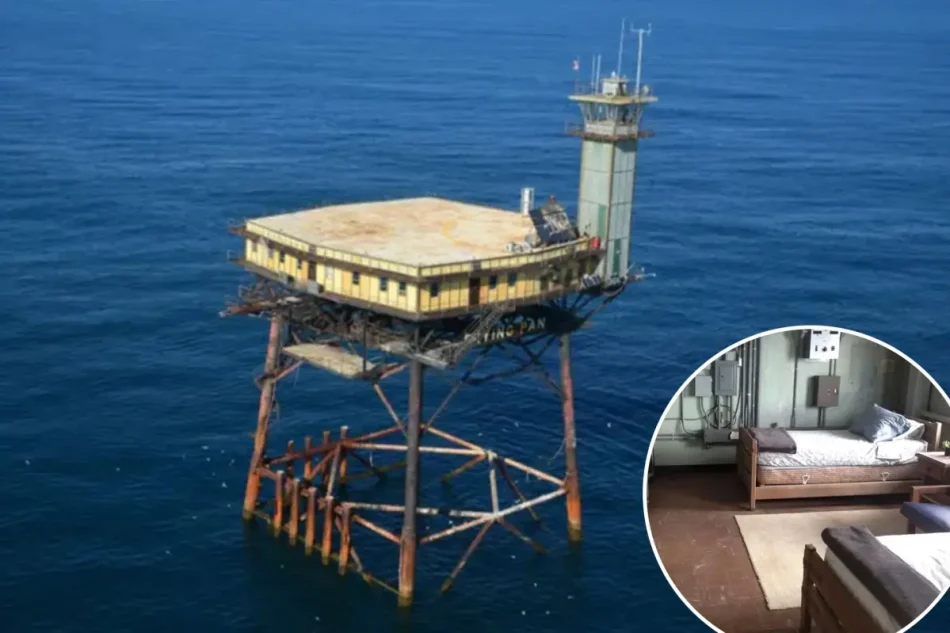
Adventurous vacationers are shelling out thousands of dollars to be ferried deep into the Atlantic Ocean and left stranded on a rusting steel tower 80 feet above shark-infested waters, in what has been dubbed the world’s most dangerous hotel.
A TikTok video posted by charter boat captain Austin Aycock showing him depositing six tourists at the Frying Pan Tower off the North Carolina coast has racked up 2.2 million views, with commenters torn between terror and fascination.
“See you in a couple days!” Aycock cheerfully called out as he pulled away, leaving the group marooned on the decommissioned Coast Guard light station that rises 135 feet above the Atlantic swells.
The clip prompted one viewer to note that the farewell was “literally like a line out of a horror movie.”
The tower, built in 1964 and located about 34 miles offshore in a stretch of coastline historically known as the Graveyard of the Atlantic, has been repurposed as one of the most offbeat accommodation experiences in the U.S.
Stays run roughly $200 per person per night with a three-night minimum, putting the total tab at around $600 per guest for a short stay.
However, Aycock confirmed in the comments that one group managed to last considerably longer than a weekend getaway. “The longest I’ve had a group stay out there was two weeks!” he wrote.
Getting there is half the adventure.
Guests are hoisted up to the main deck via a high-speed lift that hauls them 80 feet into the air in under a minute. Below, the waters teem with great white, bull and tiger sharks.
The tower sits squarely in hurricane alley, where tropical storms routinely batter the structure with winds exceeding 100 mph. In a medical emergency, help is a helicopter ride or a 35-mile boat trip away.
The tower accommodates up to 12 guests across eight bedrooms, with amenities that include a fully equipped stainless steel kitchen, washer and dryer, hot showers and high-speed internet powered by solar energy.
Freshwater comes via a reverse osmosis filtration system.
Activities range from fishing and snorkeling over a protected reef below the structure to skeet shooting with biodegradable clay targets and teeing off biodegradable golf balls made from fish food.
Despite the creature comforts, the comments section of Aycock’s viral post reflected widespread disbelief that anyone would voluntarily make the trip.
“You couldn’t pay me enough to stay over an ocean on sticks,” one viewer wrote. Another declared it would be “the easiest ‘No’ of my life.”
Others saw the upside. “The zombies cant get you way out there,” wrote one commenter, to which Aycock replied, “Zombie free!”
The tower’s more anxious admirers zeroed in on practical concerns.
“My anxiety would never allow this,” wrote one viewer with 20,200 likes on the comment. “If a medical emergency, do they have to call the coast guard?”
The property is maintained by a volunteer community dedicated to preserving the historic station. And they have welcomed guests since 2012.
A professional chef can be hired for groups unwilling to cook communally, and the 5,000-square-foot helipad doubles as a prime spot for stargazing, sunrise watching and hammock lounging above open ocean.
For the more philosophically inclined among the 1,240 commenters, one question cut to the chase.
“What’s the opposite of a bucket list?” wrote one user.


